
The Top 10 Things You Need To Know About The Cost Transparency Of PAT in Stoke on Trent
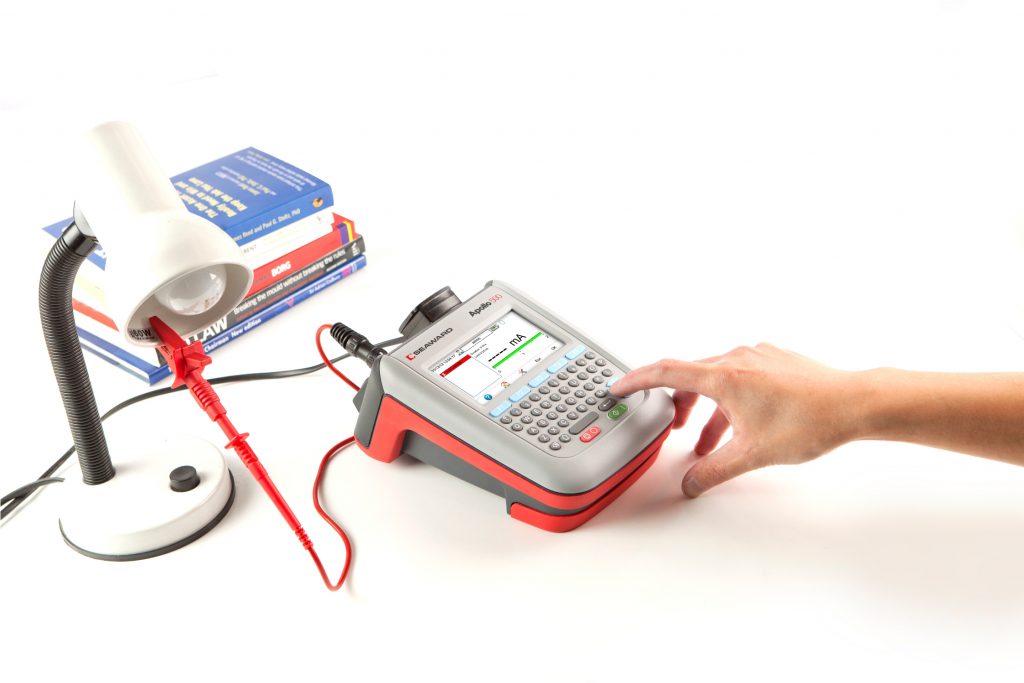
The pricing structure for Portable Appliance Testing (PAT) services in the UK exhibits significant variation, making cost transparency an essential factor in selecting a reliable and reliable service provider. Unlike some regulated industries with fixed pricing models PAT testing costs are determined by several factors, including the volume of equipment used and complexity of testing, geographic Stoke on Trent, and service provider expertise. Transparent pricing includes more than just a per-item cost. It is also a consideration of all charges that could be incurred for service, levels of service, and the value over time of an item. It is crucial for those working under the Electricity at Work Regulations, 1989, to be aware of the complete cost structure. This will not only assist in budgeting, but also ensures that cost considerations don't affect the quality or compliance. A truly transparent provider will clearly define what's included in their quoted price as well as what may be added charges, and how their pricing structure aligns with a risk-based, compliant approach to the safety of electrical equipment.
1. Per-Item Pricing vs. Fixed-Price Contract Models
PAT testing providers typically offer two pricing options. The per-item pricing model is an agreed price for each appliance that is examined (e.g. between PS1.50-PS3.50). This can be an economical alternative for small businesses that have less appliances. Fixed-price contracts are typically preferred by large companies with hundreds of assets because they guarantee budget security. Transparent providers provide both options and suggest which one is the most cost-effective option for the specific circumstances of each client. They are clear about the price for every item or fixed-fee comprises.
2. Rates for appliances and Risk Categories in Stoke on Trent
Professional providers don't charge an unbeatable flat fee for all equipment. Transparent pricing reflects differences in effort and risk for different types of equipment. In the typical office environment the most basic IT equipment (Class I) is the cheapest. Equipment that is more difficult to access, complex, or high-risk (e.g. medical equipment, industrial machinery or commercial catering equipment) or requires additional knowledge or time will be costlier. The quote should clearly define appliances and apply appropriate tier pricing.
3. Included in the quoted price is a breakdown of everything that it comprises in Stoke on Trent
Transparency requires a thorough breakdown. The price should include an inspection of the visual as well as the electronic tests that are required, the application of the passed/failed label, the comprehensive documentation including the certificate of compliance and the provision of an asset report. The price should also include VAT. This is often left out of many quotes that seem cheap, but they're added as extras at a later date. This could result in a significant increase in the final price.
4. Other and possible hidden charges in Stoke on Trent
A transparent service will disclose all additional fees up front. This includes:
Call-out fees are a minimum charge which must be paid when you visit a specific site. They are especially important when there are fewer appliances. in Stoke on Trent
Mileage charges: For sites situated at a distance of a considerable distance from the station of engineers. in Stoke on Trent
Re-test costs are the cost to retest an appliance following the repair. in Stoke on Trent
Fees charged for the production duplicate reports and certificates. in Stoke on Trent
Fees for out-of-hours testing: A fee for testing conducted outside normal business hours.
The estimate should include the additional cost and possibility of them occurring.
5. Prices for Remedial Work and Repairs in Stoke on Trent
Costs of repairing faults discovered in the course of testing is an important aspect in which transparency is essential. The service provider should have a transparent price list that includes common reparative actions, including cable repair, plug replacement and fuse replacement. It should also be explained how the provider obtains client consent before making repairs. Some providers include a first-line repair (such as a plug replacement) in their test prices and should be clearly stated.
6. Costs for testing based on risk in Stoke on Trent
Modern, efficient PAT services do not depend on annual tests instead they rely on risk assessments. Service providers who are transparent will speak about the costs of applying this method. They could suggest longer intervals in between formal tests of low-risk equipment (e.g. offices with double insulation) and also visual inspections. The latter can be a significant cost-saving measure compared to suppliers who insist on testing every item annually. Quotes should reflect the tailored frequency of testing based on the risk.
7. The Costs of Calibration as well as their Application
The PAT testers of the provider must be calibrated every year by a UKAS-accredited laboratory to ensure accuracy. This is which is a cost that the company must pay. A transparent provider is able to confirm that in their estimate they have included the cost of this calibration and that their equipment, which is calibrated, is up-to-date. If requested, they must give proof of the calibration. The company may have slashed the quality assurance measures when their estimate seems to be low.
8. Professional Experience and Qualified in Stoke on Trent
The price should reflect the level of technical expertise of the technician. Providers who hire engineers with City & Guilds qualifications, have a lot of experience and have a thorough understanding of the IET Code of Practice can cost a little more than a less experienced operative. Transparency in this context means that the provider must be able to explain the benefits offered by their employees, which helps to achieve an accurate compliance score.
9. Pricing and discounts for multiple sites in Stoke on Trent
Transparent providers will provide multi-site contracts or the option of a volume discount for companies with multiple sites or big appliances. This should be included in the proposal and include information on the discount thresholds, as well how the pricing is to be applied across all sites. This will make it easier to procure and help in reducing costs for larger clients.
10. Quotation Validity Period, Price and Guarantee Conditions in Stoke on Trent
To ensure total transparency, the price should contain clear and concise terms. The contract must specify the validity timeframe of the quotation (normally between 30-60 days) to protect clients from price hikes after acceptance. It should also state any price guarantees. Indicate whether the cost per item or the fixed price will remain for the duration a contract. This can help to avoid unpleasant surprises and provides accurate financial planning. See the top PAT testing in Stoke on Trent for site tips.
Top 10 Tips On Certification And Qualifications For Fire Extinguisher Service in Stoke on Trent
The service of fire extinguishers in the UK is governed under a system that guarantees competency, safety and compliance. Unlike certain professions that are subject to state licensing requirements as well as other professions, the "Responsible" person (as defined by the Regulatory Reform (Fire Safety) Order of 2005) is obliged to select a qualified professional. It is important to understand the nuances of certificates and qualifications since they form a component of any due diligence required by law. As the market is crowded with a variety of service providers, ranging from highly accredited companies to private operators, it's essential to be aware of what qualifications refer to and their importance. The wrong credentials for a technician can cause a policy to be invalidated, not meet legal requirements and, most important, leave your property and its occupants vulnerable. This guide covers the top ten certifications, qualifications and other factors to be considered when selecting the right Fire safety company.
1. The Gold Standard: UKAS Accredited Third-Party certification (BAFE Sp101)
The BAFE's SP101 scheme is the single most important certification that a business should be able to. BAFE (British Approvals for Fire Equipment) is an independent registration body. SP101 is the sole scheme that is specifically designed specifically for portable extinguishers. The UKAS certification is a crucial factor. This means the scheme itself has been rigorously assessed in accordance with international standards. The highest evidence for a company’s competence is a BAFE SP101 certification that has been accredited by UKAS. It confirms that the business's technicians, working practices equipment, as well as quality management systems are regularly reviewed to ensure consistent conformity with British Standards.
2. The Alternative Benchmark is FIRAS certification.
FIRAS – Fire Industry Association Recognition and Accreditation Scheme is a second UKAS Accreditation scheme managed by the Fire Industry Association. In terms of rigor and status it is the direct equivalent to BAFE SP101. FIRAS Certification offers the same degree of confidence that a business has been independently assessed and audited, and has been found to be compliant with all relevant standard including BS 5306-3. For a responsible person, a company holding the BAFE SP101 or FIRAS certification is a valid and reputable choice. The most important thing is the UKAS certification of the scheme in itself.
3. The Foundation: Compliant with BS The Foundation: Compliance with BS in Stoke on Trent
The British Standard BS 5306-3 is the basis of any certification or qualification. This code is the ultimate guide to fire extinguisher services. Its rules must be understood by professionals who are skilled. They prescribe procedures for monthly inspections and regular maintenance along with 5-year extended service for extinguishers that use water, foam or powder, as well as 10 year overhauls for CO2 units. Certifications like BAFE and FIRAS exist to audit and validate compliance. When you are evaluating companies, ask the company to provide a detailed explanation of how they are in compliance with this standard.
4. Individual Technician Competence – The FIA Units of Competence
While the company's certification is important but the job is performed by individuals. The FIA Units of Competence are the most recognized individual qualifications. These training modules are recognized by the national government and evaluated in accordance with National Occupational Standards. The principal modules are:
FIA Unit 001: Maintenance of Portable Extinguishers
FIA Unit 010: Overhaul of portable fire extinguishers (Advanced module for extended service)
A skilled mechanic must have, at a bare minimum FIA Unit 001. Technicians providing extended service (e.g. discharges lasting five years) should have Unit 010 as well. Request potential service providers to provide specific information regarding the qualifications of their personnel.
5. The Role of Trade Associations in Stoke on Trent
A trade association such as the FIA, BAFE or BAFE is not the same as the status of a certification. These bodies can be members of a business without certifying that they adhere to their respective technical systems. It is not enough to show that the organization is competent. Do not rely solely on the generic logos of membership. Instead, look for specific technical scheme certifications.
6. Public Liability and professional Indemnity Insurance in Stoke on Trent
Insurance is a vital requirement for any reputable company. Public Liability Insurance is required (e.g. PS5m+) to protect against any accidental damage that may occur to your home. Professional Indemnity Insurance also plays crucially in covering the cost of correcting errors committed by their employees or advisors. This insurance is a prerequisite of certification. Always ask to see proof of coverage before using the services of any reputable business.
7. Manufacturer-Specific Training
While BS 5306-3 applies to all extinguishers, different manufacturers may have various models, valve mechanisms, and recharge procedure. A highly qualified technician will often undergo manufacturer-specific training. This is vital in extinguisher designs that aren't as popular or intricate. For instance clean or wet chemical agent systems. This training will allow technicians to complete the entire service on your premises in a safe and efficient manner without jeopardizing any warranties.
8. The process of auditing How do you maintain certification in Stoke on Trent
It is essential to recognize that certification is a ongoing process. Auditors certified by the auditor conduct annually audits of surveillance of BAFE and FIRAS-certified businesses. The audits are conducted without notice, and include the review of documents, chatting with technical staff, and observing the work performed on-site. These certificates are valuable because they are continuously examined by outside organizations. This ensures that the skill of technicians is not just examined at a single moment in time, but also maintained.
9. The "Competent Person", vs. "Skilled Person".
There is a crucial legal distinction. The Fire Safety Order specifies that maintenance on equipment should be carried out by "a competent person". In accordance with the law of the land, this is someone who has the appropriate education, skills, experience, and other attributes to be able implement the required measures. A competent person (or skilled tradesperson) is one who has the physical capability to complete a specific job. A trained fire extinguisher technician has to be both–possessing the practical skill to perform the task and also the necessary knowledge to understand the regulations as well as the standards and risks involved.
10. Due diligence: examining certificates and claims
The responsibility for confirming qualifications lies with the Responsible person. The mere sight of the logo on a van or website does not suffice.
Verify Online. Verify Online. BAFE and the FIA both have directories online, where you can search for a company's information and confirm the status of its certification. in Stoke on Trent
Ask for certificates. A legitimate business is willing to send copies, like the BAFE SP101, their FIRAS certificate as well as their insurance certificates. in Stoke on Trent
Check Expiry Dates: Be sure that all insurance and certifications are current and up-to-date. in Stoke on Trent
This is the primary defence against using non-qualified services and is an important aspect of demonstrating your own commitment to your. Take a look at the best fire extinguisher service in Stoke on Trent for website tips.
